How to Grow Geranium Cuttings
This website is reader-supported - thank you! This post may contain affiliate links. As an Amazon Associate, I earn from qualifying purchases at no extra cost to you.
I love working with geranium cuttings, and over time, I've picked up some tips that have really improved my results when propagating geraniums.
Here I’ll share my process for taking cuttings from a healthy geranium plant and turning them into thriving new roots and leaves.
Whether you’re working with a single geranium plant or an entire garden of them, these methods have helped me boost my success rate without a lot of fuss.
For more propagation tips, check out my guides:

Materials and Preparation
Before I get started with any geranium cutting project, I always take a moment to gather everything I need.
Here’s a look at what I rely on:
Clean Cutting Tools:
I always start with a clean, sharp pair of scissors or pruning shears.
Having a tool that’s ready to work is key for making precise cuts on the geranium stem.
A quick clean before use also helps keep any unwanted bacteria away from the healthy plant tissue.

Rooting Products:
Using a rooting hormone product is optional but it can boost the chances of new roots forming on cuttings, setting them up for success.

Potting Soil and Containers:
My next stop is always the container and potting soil.
I prefer using a well-draining mix along with containers that have drainage holes.
This setup is important for preventing problems like root rot and ensures that the cutting isn’t left sitting in too much water.
It’s something that really sets the stage for healthy new growth.

propagating in water:
If I decide to propagate my geranium cuttings in water, I make sure to have a clean, clear container ready.
I really love watching the progress as new roots emerge, and a transparent container lets me keep a close eye on everything happening below the surface.
For more propagations tips, check out my guides:

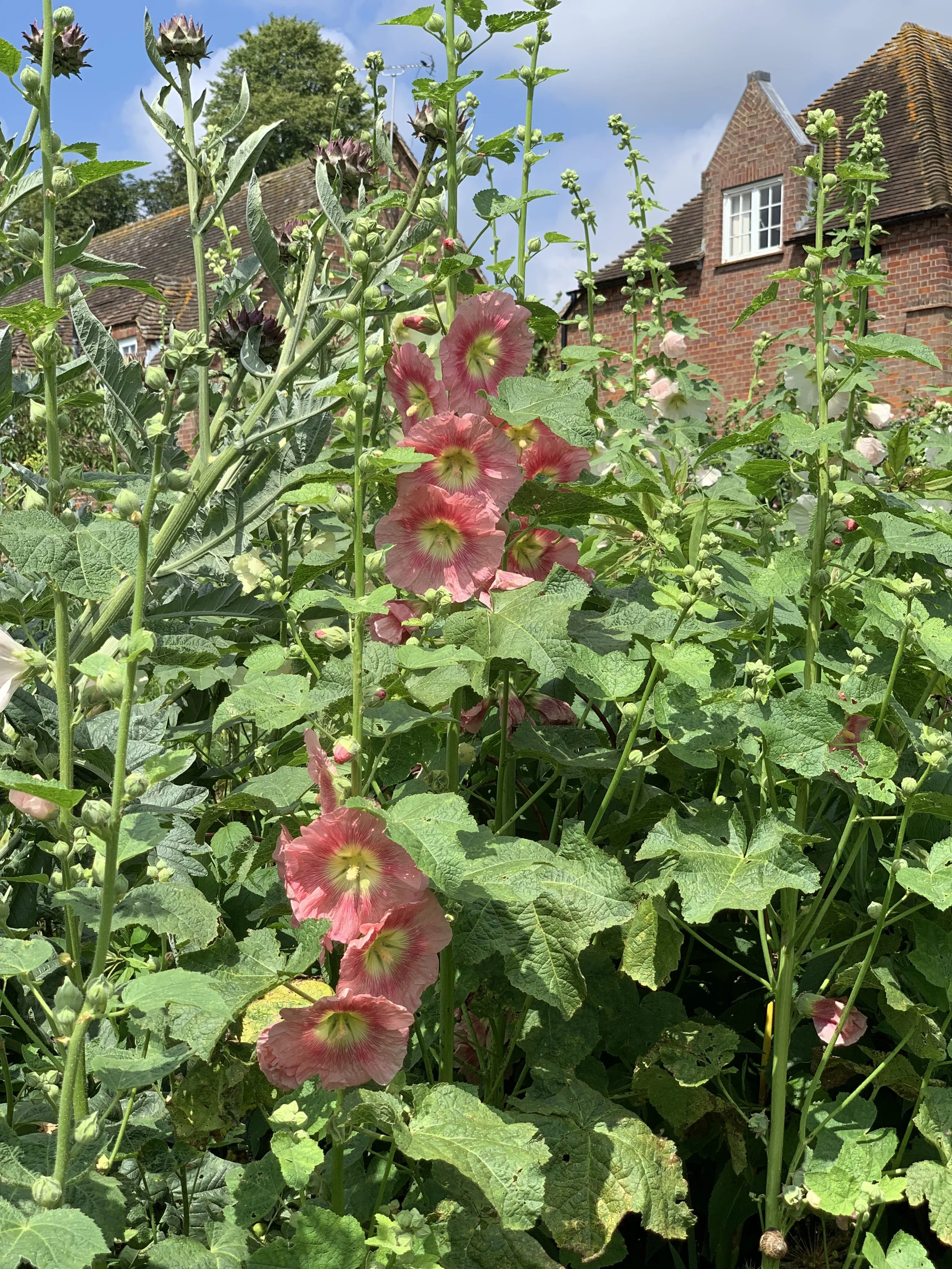
Mother plants used for taking cuttings.
Step-by-Step: Taking and Preparing Geranium Cuttings
Here’s how I do it:
Selecting the Cutting:
I start by scanning my mother plant for a stem that looks healthy and full of promise.
I prefer a cutting that's around 4–6 inches long, with at least one well-defined node.
That node is my little signal that new roots are likely to form.
Preparing the Cutting:
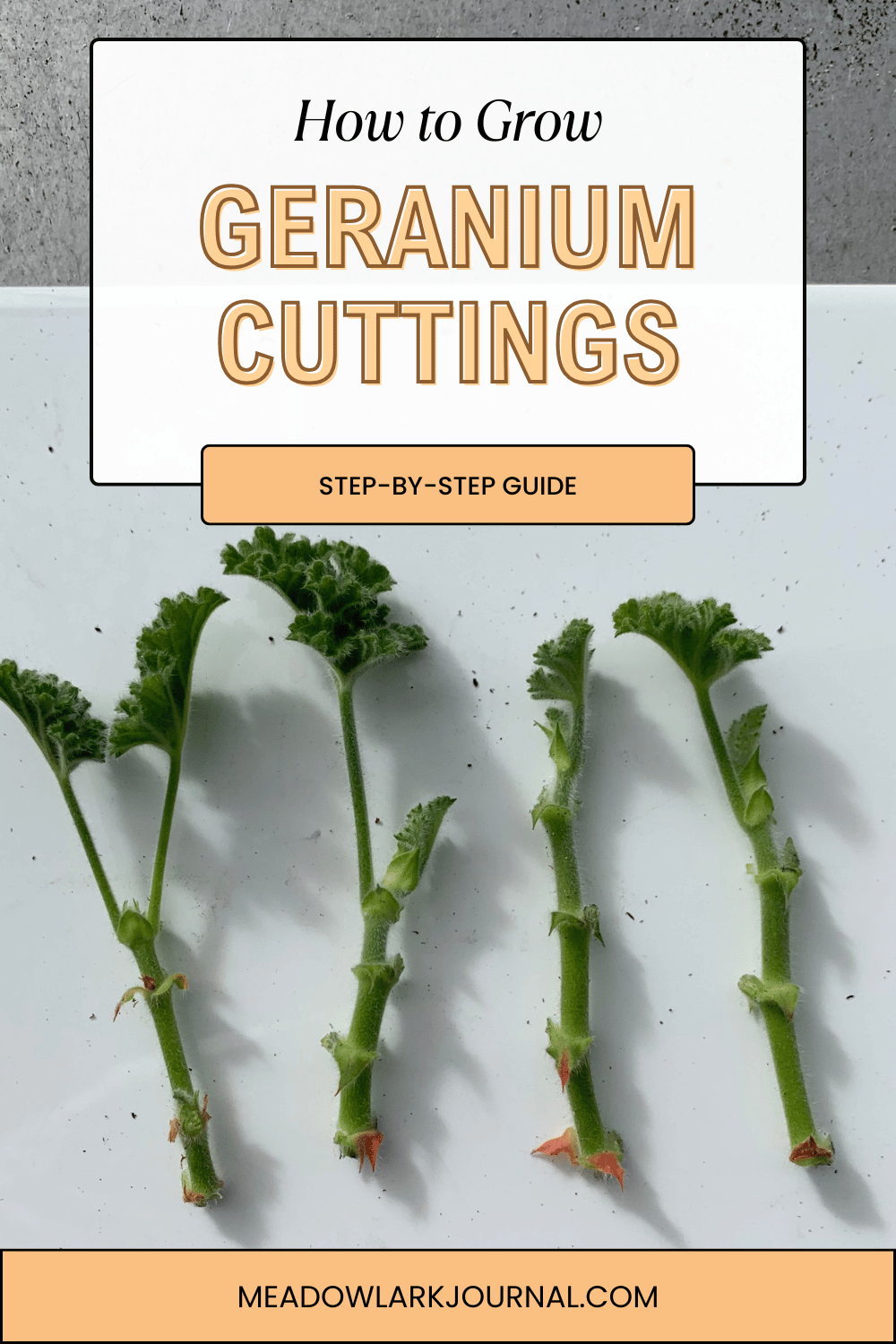
Once I’ve chosen the perfect stem, I move on to preparing it.
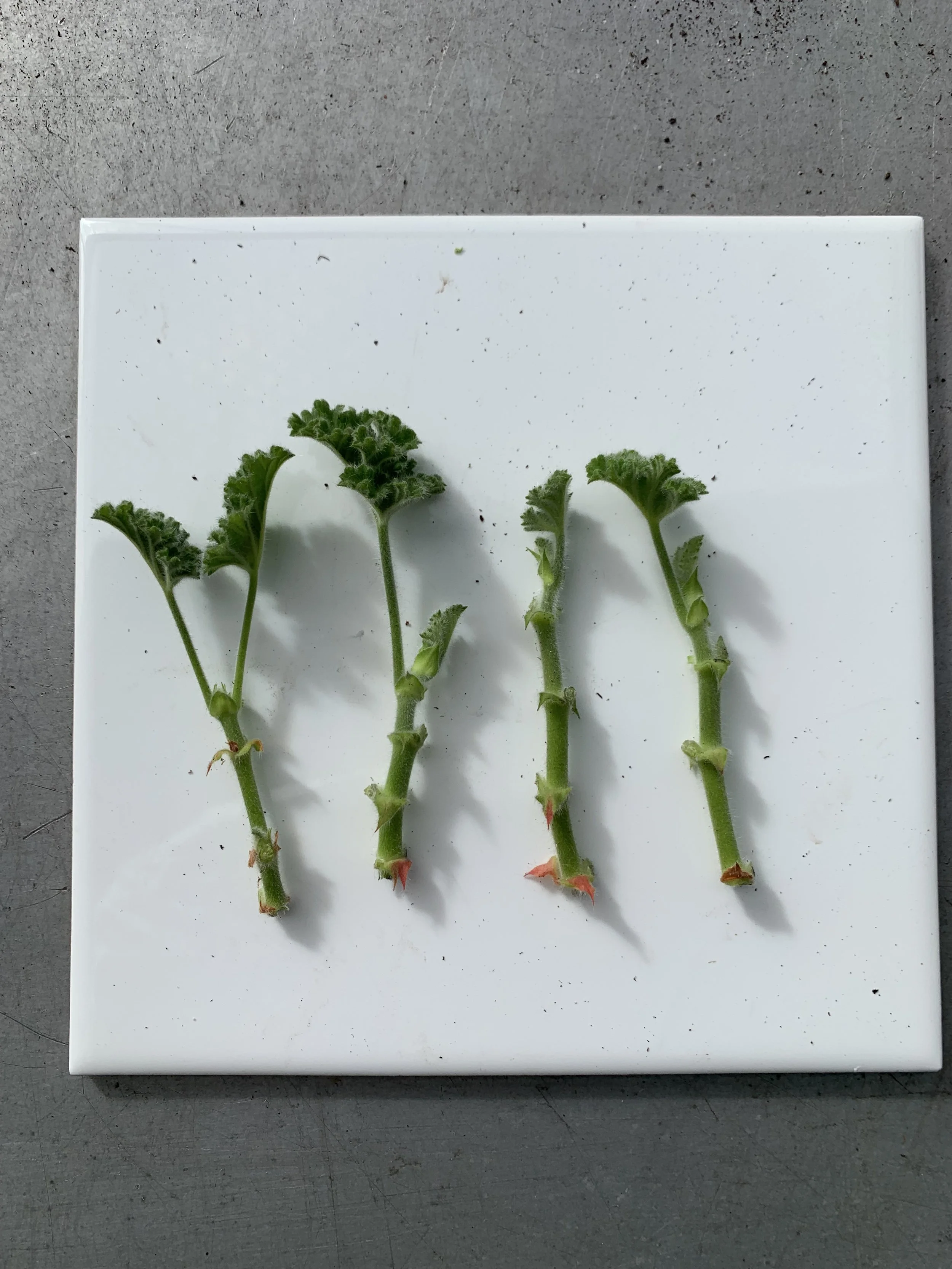
I carefully remove the lower leaves, leaving one or two at the top so that the node is fully exposed.
This little bit of extra care sets the stage for healthy root growth.
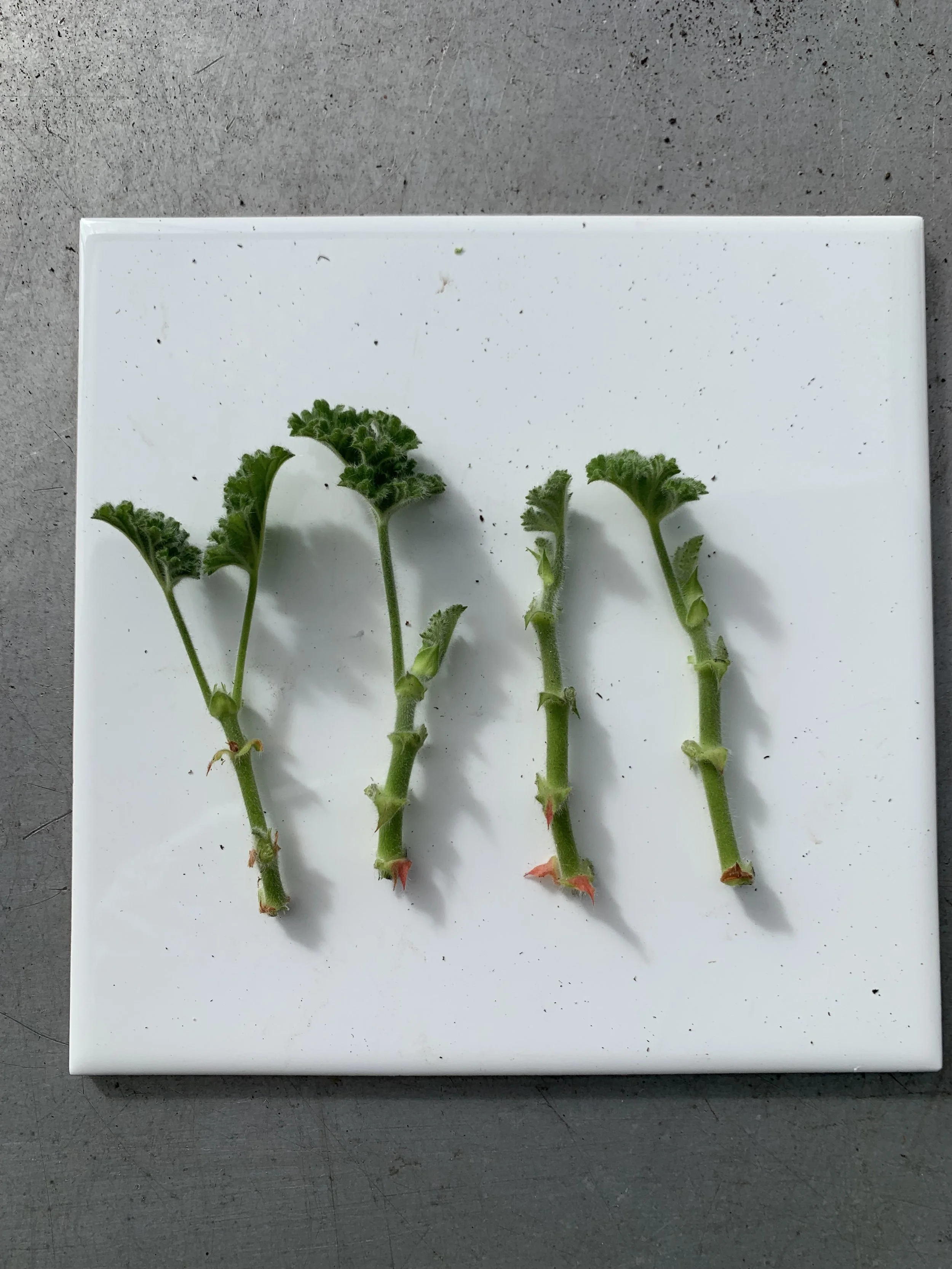
Prepared geranium cuttings.
Choosing the Rooting Method:
At this point, I decide whether to let nature work its course in water or to plant the cutting directly into soil.
Rooting in water:
I gently place the cutting in a clear jar filled with water, ensuring that the node is submerged.
Planting directly in soil:
Dip the cut end into rooting hormone or rooting powder before nestling it into moist, well-draining potting soil.
Then place the container in a spot with plenty of indirect light.
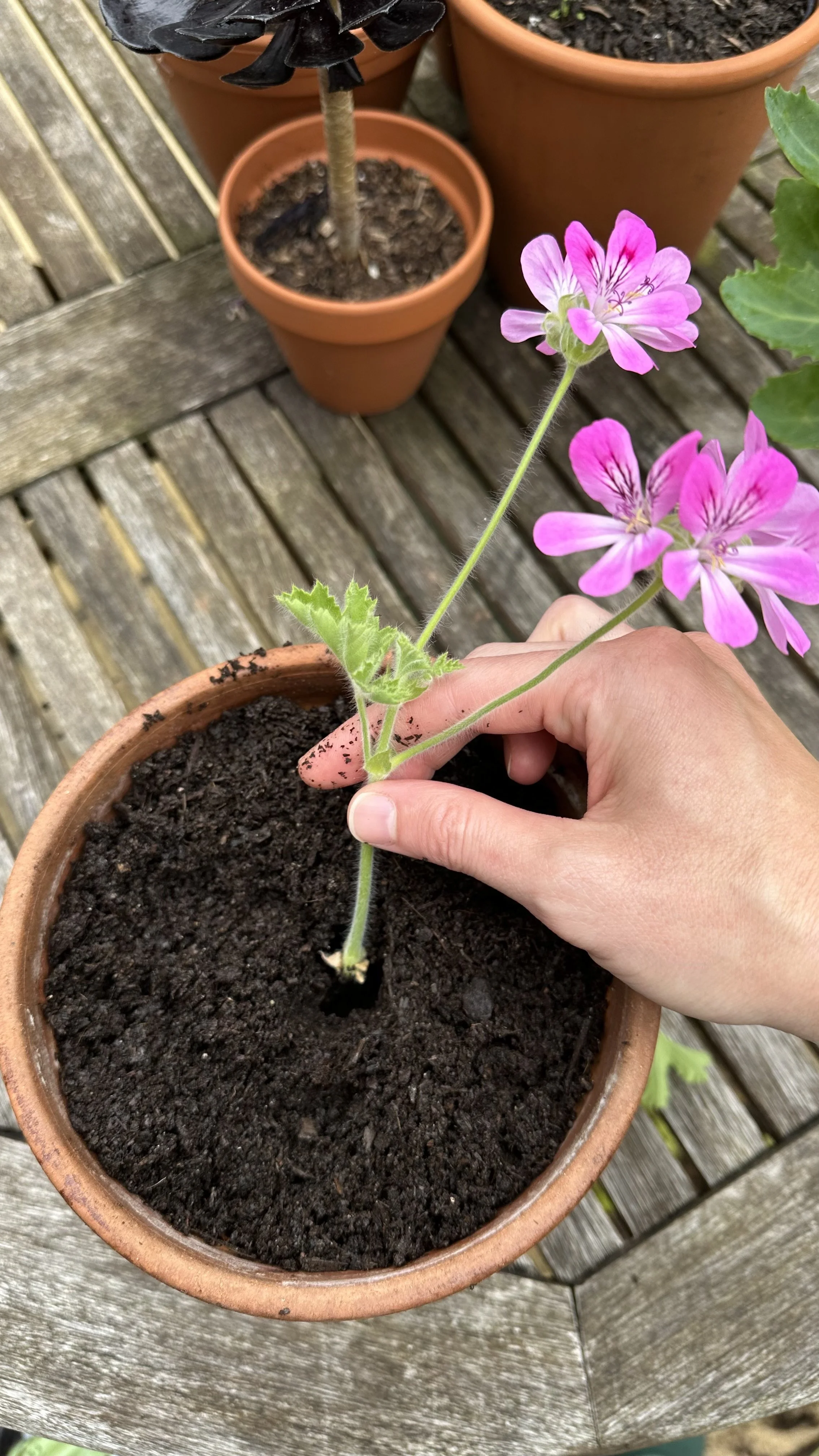
Note: I removed the flower before planting the cutting in the soil :)
Caring for Your New Geranium Cuttings
After placing your geranium cutting in water or soil, the real nurturing begins.
Here’s how I look after my new geranium cuttings, making sure they have the best chance to grow strong and healthy:
Consistent Watering
I’ve learned that the right watering routine is key.
With my cuttings in water, I make sure to keep the water fresh by changing it every few days.
If the cutting is in soil, I water gently to keep the soil consistently moist without overdoing it, excess moisture can lead to root rot, something I always want to avoid.
The Right Light and Temperature
I place my cuttings where they get plenty of indirect sunlight.
Direct sunlight can be too harsh for a young cutting, so a bright, indirect spot works best.
I also pay close attention to the temperature around the cutting.
A warm, stable environment encourages the cutting to develop new roots and leaves.
For those chilly winter months, I make sure the cutting is in a room where the temperature remains steady, reducing stress on the plant.
For more propagation tips and guides, check out:
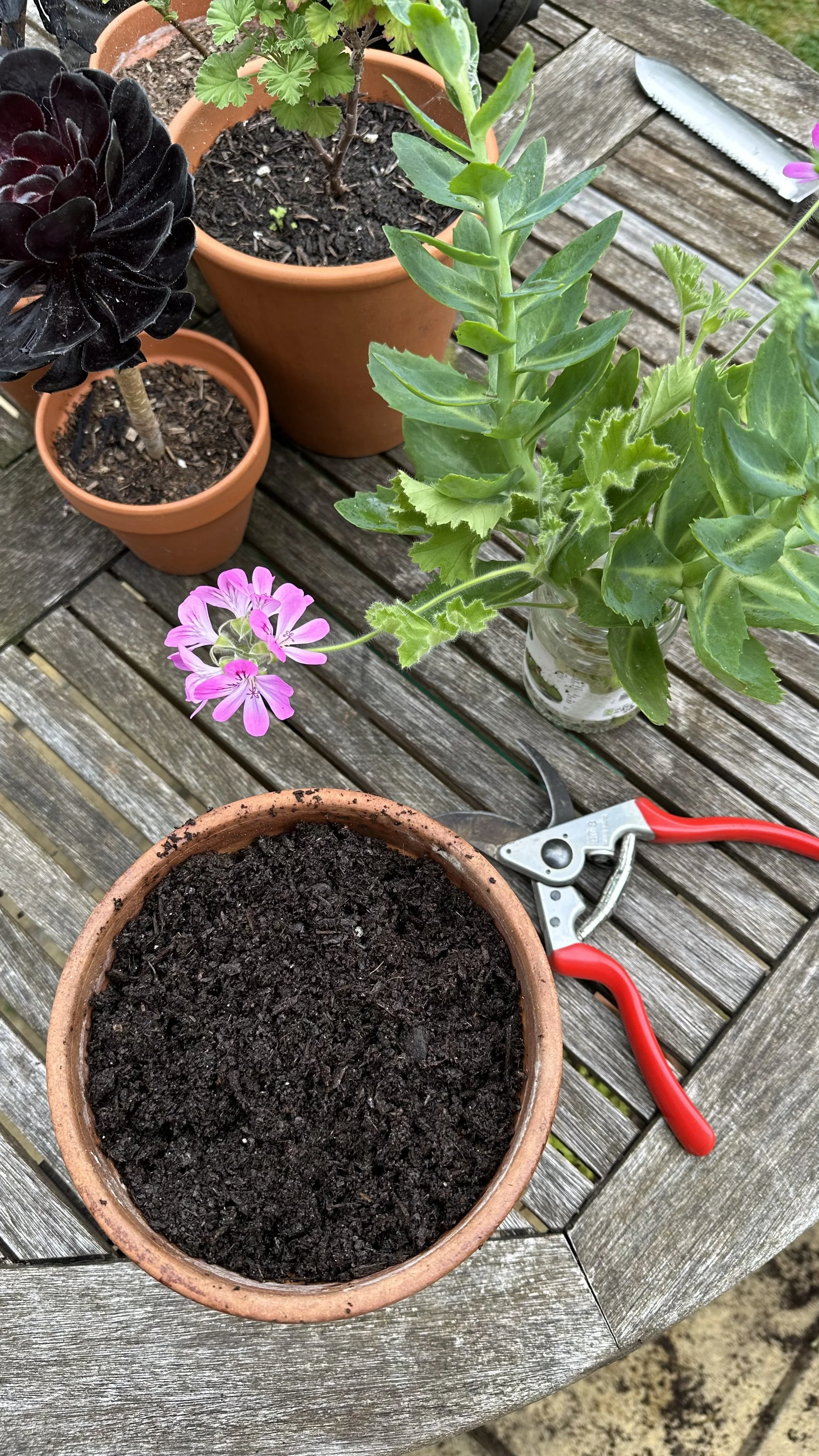
Workbench and a jar full of cutting material ready to be prepared.
For more planting tips, check out my guides:
Faqs
Below are some questions I often encounter that haven’t been covered in detail above.
Can I take geranium cuttings in September or during autumn?
Yes, you can take geranium cuttings in September.
However, as the days shorten and temperatures drop, the rooting process might slow down a bit.
If you decide to take cuttings in autumn, consider providing extra warmth indoors to support steady root growth.
Do I really need to use rooting hormone or rooting powder for my cuttings?
While many gardeners use rooting hormone or rooting powder to give their cuttings an extra boost, it isn’t absolutely required.
It really depends on your own experience and the condition of your cutting.
How do geranium cuttings propagated indoors perform compared to those grown outdoors?
Indoor propagation offers a controlled environment that can lead to steady root development.
Once the cutting establishes itself, transitioning it to outdoor conditions can result in a robust geranium plant.
The key is to gradually adjust the cutting to outdoor light and temperature to avoid shock.
What are some signs that my geranium cutting is healthy and ready for further care?
A healthy geranium cutting will show firm, unblemished stem tissue along with a few fresh leaves.
Look for the emergence of new roots or subtle leaf expansion as indicators of vitality.
If the cutting appears limp or discolored, it may need adjustments in watering or temperature.
Pin this post to save it for later!